



Interesting facts about
Passive corrosion protection: principles, methods and practical solutions for durable surfaces
Corrosion incurs high costs and can impair the functionality of components. This is where passive corrosion protection comes into play: it protects surfaces from environmental influences by forming a protective barrier and is a key component of industrial coating systems.
Passive corrosion protection: Definition
Passive corrosion protection is easy to explain: it prevents corrosion by separating the metal from corrosive agents such as water, oxygen or chemicals with a protective layer. This barrier prevents the reaction from occurring in the first place.
In practice, passive corrosion protection is a key component of durable surface treatments, particularly in industrial applications where components need to function reliably over long periods of time.
Typical characteristics:
- Physical separation of the material from its surroundings
- Protection through coatings or coverings
- No active electrochemical reaction is required
Active and passive corrosion protection compared
Active and passive corrosion protection differ fundamentally in their mode of action: passive methods shield the metal, whilst active methods intervene directly in electrochemical processes.
Criterion | Passive corrosion protection | Active corrosion protection |
|---|---|---|
Principle of operation
| Barrier against environmental influences | Electrochemical reaction |
Objective
| Prevent contact between metal and the medium | Targeted prevention/slowing of corrosion |
Examples | Paints, powder coatings, coatings | Sacrificial anodes, cathodic protection |
Application | Wide range of industrial applications | Special applications (e.g. offshore) |
In practice, the two approaches are often combined, with passive corrosion protection forming the basis of long-lasting coating systems.
Methods of passive corrosion protection
Passive corrosion protection involves various methods that are combined depending on the application. The key factor is the interaction between the material, pre-treatment and coating.
Coating systems as a key solution
Coatings are among the most important measures in passive corrosion protection, as they act directly on the surface:
- Powder coating
- Liquid paints
- Electrocoating
They form a protective barrier and prevent corrosive substances from penetrating the surface. This shields the metal from harmful environmental factors.
Metal coatings
In the case of metallic coatings, the component is specifically coated with an additional layer of metal to protect the surface, for example by:
- galvanising
- Aluminium coatings
These layers also act as a barrier against environmental influences and, depending on the system, can support additional protective mechanisms.
Conversion coatings and pre-treatment
Pre-treatment is an essential step, as it lays the foundation for the effectiveness of subsequent protective coatings:
- Cleaning and degreasing
- Phosphating or other conversion processes
- Improvement in adhesion and protective performance
Careful pre-treatment improves the adhesion of the coating, enhances its protective properties and helps to ensure a uniform surface.
Konstruktiver Korrosionsschutz
In addition to coatings and finishes, the design of a component also plays an important role in corrosion protection:
- Avoiding sharp edges
- Surfaces available for coating
A corrosion-resistant design makes coating easier and helps to prevent weak spots where corrosion is likely to occur.
Passive corrosion protection: Real-world examples
Typical examples of passive corrosion protection can be found in almost all industrial sectors and demonstrate just how varied the requirements can be depending on the application:
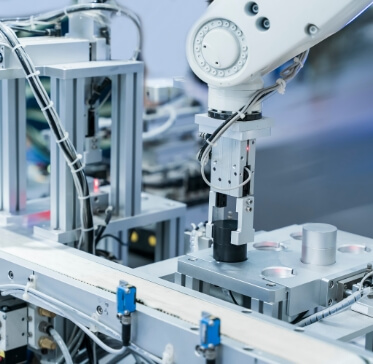



A commonly used approach is the multi-layer system. In this system, a primer ensures adhesion and corrosion protection, whilst the topcoat provides additional protection and, at the same time, delivers the desired finish.
Why coating systems are crucial
Industrial practice shows that corrosion protection is not a single product, but a coordinated system. Coatings play a key role in this, as they directly protect the component from environmental influences.
Key influencing factors:
- Coating thickness and even application
- Tailored paint finish
- Process reliability in application
- Appropriate pre-treatment
Powder coatings deliver consistent results when the material and process are properly matched. They help to achieve durable surfaces of consistent quality.
Epoxy powder coatings also play an important role in this context. They provide effective corrosion protection and are frequently used as primers in multi-coat systems.
Implementing passive corrosion protection correctly
Effective passive corrosion protection is achieved through the coordinated interaction of several factors. It is essential that all stages, from planning to testing, are coordinated:
Clearly define requirements
Take into account mechanical, chemical and climatic stresses
Select a system
Determine the appropriate coating systems and suitable layer structure
Adjust the pretreatment
Laying the foundations for liability and legal protection
Keep the process stable
Consistent parameters ensure consistent results
Regular inspection and maintenance of the entire application system
from pre-treatment to the curing oven
Check quality
Regular checks of coating thickness and adhesion
Only when all the steps work together can passive corrosion protection be achieved that functions reliably in practice and remains effective throughout its intended service life.
System solutions for sustainable corrosion protection
Passive corrosion protection only achieves its full effect through the coordinated interaction of all components – from pre-treatment and coating application to process control. FreiLacke offers bespoke system solutions for a wide range of industries and requirements.
We offer comprehensive coating systems from a single source – from powder coatings and liquid paints to cathodic electrocoating (KTL) solutions. From specification through to reliable implementation, we support you every step of the way, ensuring reliable, long-lasting corrosion protection.
Discover our corrosion protection solutions
Long-lasting corrosion protection provided by FreiLacke.
FAQ
Passive corrosion protection protects metals by means of a dense coating or layer that keeps corrosive agents such as water, oxygen or chemicals at bay.
It is the standard solution in many industrial applications, particularly when combined with appropriate surface preparation and tailored coating systems.
Pre-treatment is essential for adhesion and long-term protection. Without cleaning, degreasing and conversion coatings (e.g. phosphating), even a high-quality coating loses its effectiveness.
Yes, in demanding environments such as offshore applications, both methods are often combined to achieve maximum service life and protection.
Our focus areas as a coating manufacturer