


Outstanding Performance:
Single-coat KTL acrylate protects Trilex steel rims
At Ples’s production facility in Hungary, traditional engineering meets modern coating chemistry.
The challenge: to protect heavy components with extreme wall thicknesses reliably and efficiently. The solution lies in a special KTL acrylate that combines corrosion protection and UV stability in a single step.
The foundation: heavy metal and forming technology
Around 100 kilometres north-east of Budapest lies a unique industrial niche. It is here that Ples manufactures the legendary Trilex steel rims – originally a German/Swiss innovation renowned for their robustness in the heavy commercial vehicle sector.
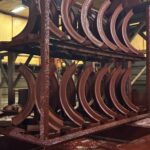
The manufacturing process begins with sheer force: steel blanks with a thickness of 7 to 30 mm are shaped using massive presses. Forces of up to 400 tonnes are applied in the process; these material thicknesses pose particular challenges not only for the mechanical engineering but also for the subsequent surface treatment.
Pre-treatment: Cleanliness as the foundation
Before the paint is applied, all components undergo intensive mechanical and chemical preparation. After blasting, which ensures the necessary surface roughness and removes scale, a modern 8-zone pre-treatment process follows.
- Cleaning: An alkaline degreasing process reliably removes residues from the forming process and the machining equipment
- Conversion coating: Zinc phosphating forms the chemical bond betweenthe solid steel and the paint finish.
The coating: KTL acrylate as an efficient single-coat system
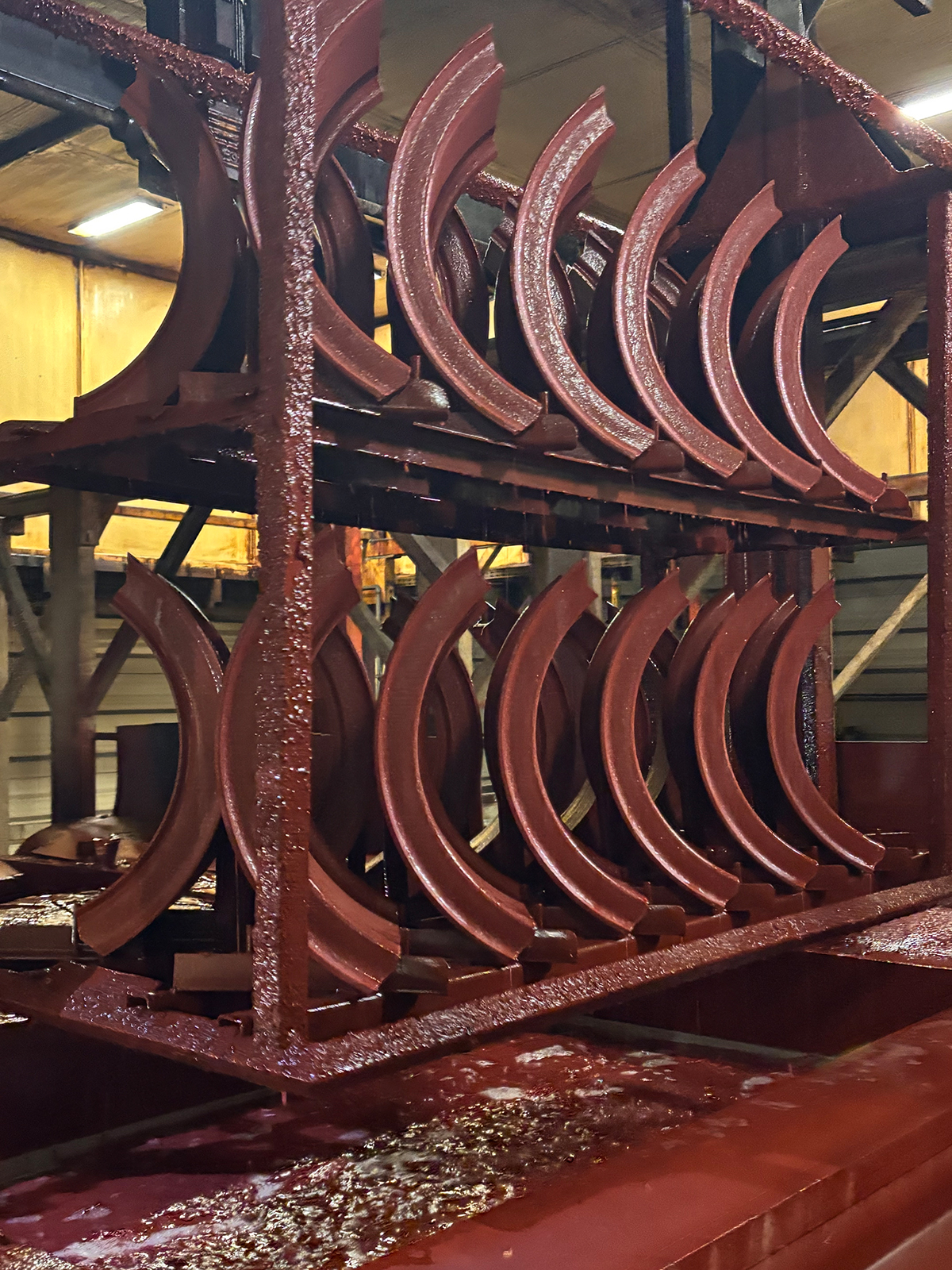
Whilst traditional KTL processes (usually epoxy resin-based) offer excellent corrosion protection, they are generally not UV-stable and require a topcoat. Ples takes a more efficient approach here. A KTL acrylate in the colour RAL 3009 Oxide Red from FreiLacke is used.
The key advantage of this system is that it functions as a single-coat system. The acrylate base provides high resistance to UV exposure, such as sunlight, whilst still delivering very good corrosion protection. The KTL acrylate was specifically tailored by FreiLacke to meet Ples’s application requirements and particular challenges. The focus was on achieving a good balance between corrosion protection, mechanical properties, UV resistance and excellent colour stability.
The process parameters in detail:
- Coating time: 120–240 seconds
- Coating thickness: 30–40 µm – to guarantee a closed, homogeneous surface even on solid and blasted components.
- Rinsing concept: Two ultrafiltrate rinses with a cascade configuration ensure high material yield and an excellent overall surface finish.
Conclusion
The example of Ples impressively demonstrates that cost-effectiveness and high-end protection are not mutually exclusive. By dispensing with an additional top coat, the company saves time, energy and material costs without compromising on the quality of the Trilex rims.
A robust process that gives the ‘heavy metal’ from Hungary the necessary shine and protection.
Ein stabiler Prozess, der dem „Schwermetall“ aus Ungarn den nötigen Glanz und Schutz verleiht.
Der entscheidende Vorteil dieses Systems: Es fungiert als Einschichtsystem. Durch die Acrylat-Basis wird eine hohe Beständigkeit gegen UV-Belastung wie Sonnenlicht und gleichzeitig immer noch ein sehr guter Korrosionsschutz erzielt. Das KTL-Acrylat wurde durch die Entwicklung bei FreiLacke eigens auf die Anwendung und besonderen Herausforderungen der Firma Ples zu geschnitten. Dabei lag der Fokus auf einer ausgeglichenen Balance, zwischen Korrosionsschutz, mechanischen Eigenschaften, UV-Beständigkeit sowie einer sehr guten Farbtonstabilität.
A brief digression: The Trilex rim
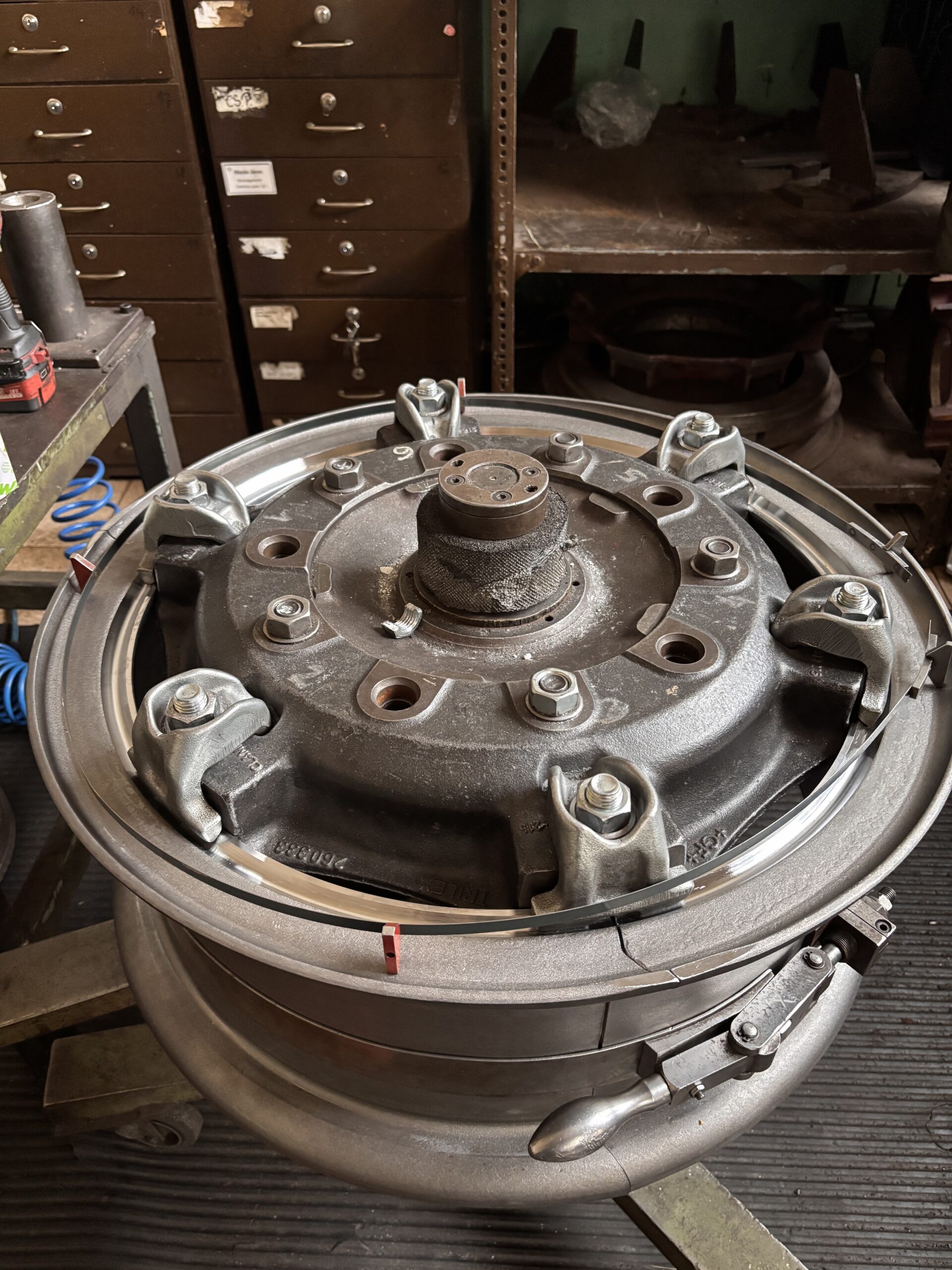
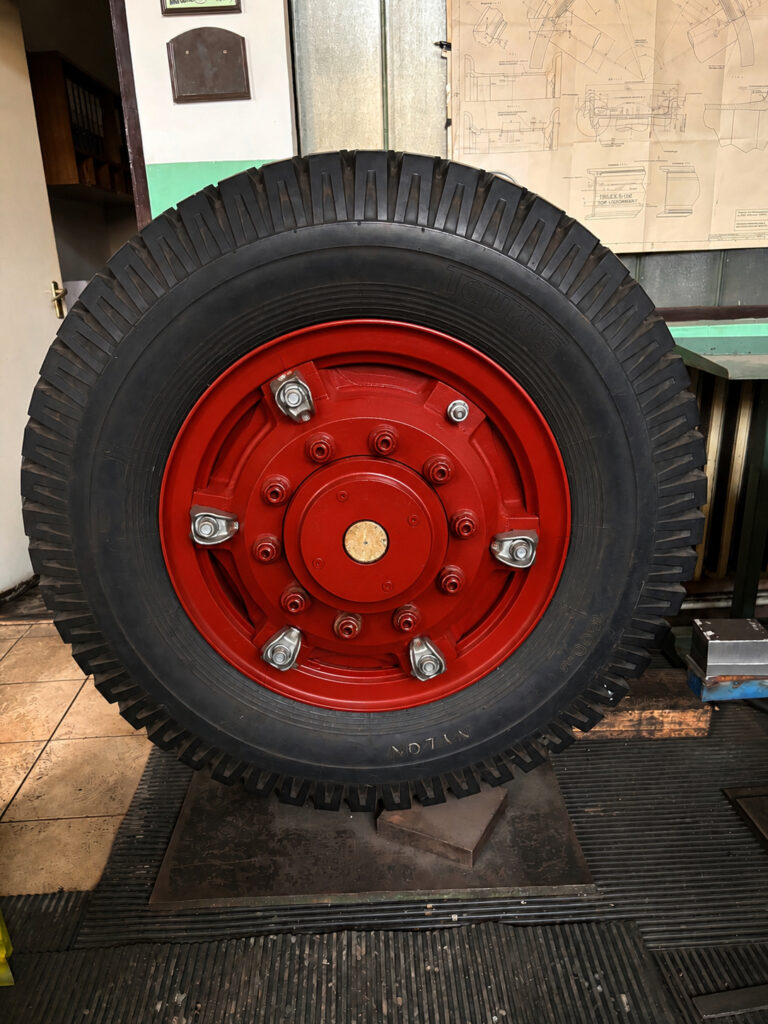
The Trilex rim is far more than just a component; it is a piece of industrial history. Originally developed by the Swiss company Georg Fischer AG (GF), it revolutionised the handling of heavy-duty vehicles at a time when punctures were still a daily occurrence.
Unlike the single-piece disc wheel rims that are widely used today, the Trilex system consists of a three-part rim ring. These segments are secured to the wheel hub by a special clamping system. This design was a masterpiece of engineering, as it offered enormous stability whilst being relatively simple to fit.
Im Gegensatz zur heute weit verbreiteten einteiligen Scheibenrad-Felge besteht das Trilex-System aus einem dreigeteilten Felgenkranz. Diese Segmente werden durch ein spezielles Spannsystem auf dem Radstern fixiert. Diese Konstruktion war eine Meisterleistung der Ingenieurskunst, da sie enorme Stabilität bei vergleichsweiser einfacher Montage bot.
So ist es einem LKW- Fahrer möglich ein Radwechsel ohne große Maschinen durchzuführen, was vor allem in Regionen mit geringer Infrastruktur und im Off-Roadbereich, bis heute Anwendung findet.

Author: Daniel Martin
Brief biography:
Daniel Martin knows FreiLacke inside out: his career began in 2008 with an apprenticeship as a paint laboratory technician.
After several years with the company, he moved into application engineering and ETL Technical Services in 2014.
Since then, he has been supporting customers with technical expertise, practical solutions and personalised advice directly on site.
By obtaining a part-time qualification as a Certified Technical Business Specialist (IHK) between 2021 and 2022,
he systematically expanded his technical and business management expertise.
Today, Daniel Martin is the point of contact for anyone interested in ETL-related matters, combining technical understanding with many years of practical experience.