


Collaboration for efficient coating solutions
FreiLacke: Modular control cabinet system combines CO₂ reduction, circular thinking and lean processes
Cooperation is becoming a decisive factor on the path to material-efficient industrial products: for the SIVACON 8MF1 industrial control cabinet series, Siemens subsidiary Alpha Verteilertechnik GmbH and FreiLacke are pooling their expertise to test new approaches to powder coating – balancing recycled content, process stability and quality standards.
In 2024, Siemens AG launched the SIVACON 8MF1 control cabinet series, a new variant of its tried-and-tested modular control cabinet system, which is designed, amongst other things, to be material-efficient. For the SIVACON 8MF1 industrial control cabinet series, made from ‘green‘ [1] steel and manufactured in accordance with the strict criteria of the Siemens EcoTech label, Siemens subsidiary Alpha Verteilertechnik GmbH and FreiLacke are pooling their expertise to test new approaches to powder coating – balancing the proportion of recycled material, process stability and quality standards. The enclosures are manufactured from so-called ‘green’ steel and are designed for industrial and power distribution use. The production process for this steel, which consists of 100 per cent recycled material, is powered exclusively by electricity from renewable energy sources. This enables CO₂ emissions to be significantly reduced compared with conventionally produced steel – by up to 70 per cent. [2]
At the same time, the control cabinet series also meets the strict criteria of the Siemens ‘EcoTech’ product label, which assesses a product’s sustainability across its entire life cycle. Users can therefore not only draw on a broad portfolio of system components, but also on products bearing the ‘EcoTech’ label.
The control cabinet is manufactured by Alpha Verteilertechnik GmbH in Cham. The system provider for mechanical control cabinets and distribution boards has been part of Siemens AG since 2004 and specialises in control cabinet construction. Several tens of thousands of control cabinet enclosures leave the factory every year. To achieve this, more than 7,000 tonnes of sheet steel are processed – with a consistent focus on lean processes. “Our aim is the efficient use of resources and the avoidance of any waste – from planning through to production and on to transport,” says Stefan Babl, who is responsible for procurement at Alpha Verteilertechnik. Continuous optimisation is already standard practice here.
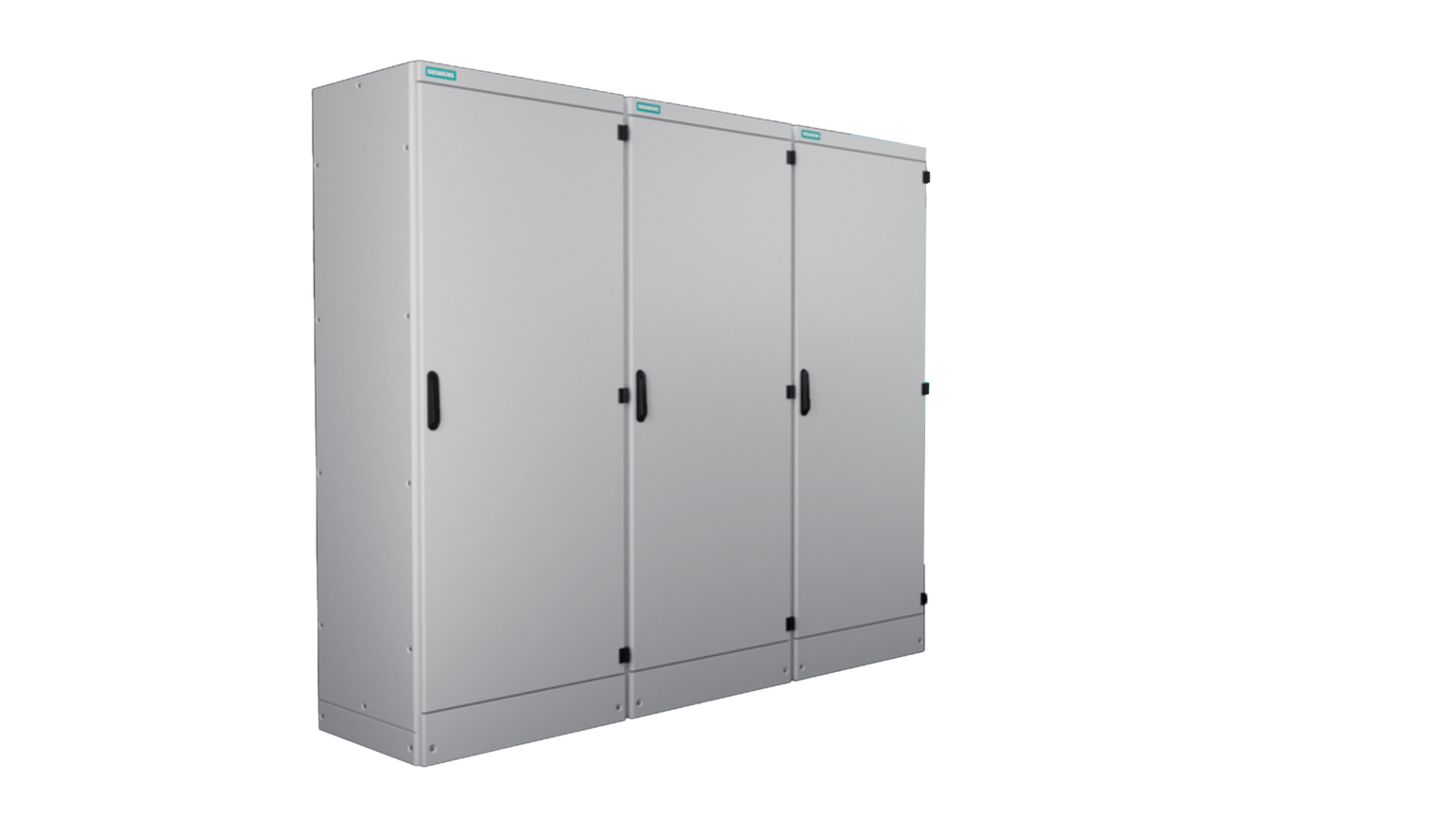
According to Siemens, the SIVACON 8MF1 series of control cabinets is made from steel that is 100 per cent derived from scrap supplied by European suppliers and produced using wind energy.[6]
Efficient processes
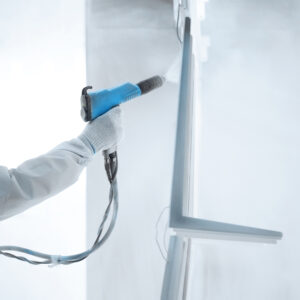
The use of recycled materials in the coating has no effect on the application properties of the powder coating. Users therefore do not need to make any changes to their processes.
The coating of steel components has always been carried out in-house. As material durability plays a key role, the steel sheets are first pre-treated using zirconium phosphating. This process ensures effective corrosion protection whilst also forming a stable adhesive base for the subsequent coating.
This is followed by powder coating in a continuous-flow system equipped with two colour-change booths. The company offers coatings in any desired colour, in both smooth and textured finishes. For specialised applications, multi-layer coatings are also used to meet more stringent requirements. “Around 90 per cent of the overspray is recovered during the process, which also demonstrates the efficiency of our coating process,” says Anton Saurer from the production department. In total, the in-house coating facility processes around 120 tonnes of powder coating annually, applied in a layer thickness of approximately 80 micrometres.
Responsibility for the environment and resources
The paint for the control cabinets is supplied by FreiLacke, amongst others – and has been since 2004. Environmental and resource considerations have been an integral part of the company’s development for over 30 years and are incorporated into various areas of the business. For example, the photovoltaic systems at the company’s headquarters in Döggingen (Schwarzwald-Baar district) have been continuously expanded. Around two-thirds of the water required for heating, cooling and cleaning is supplied via the company’s own rainwater harvesting system. Industrial trucks are powered entirely by electricity from renewable energy sources, as FreiLacke clearly sets out in its 2026 environmental statement.3 Furthermore, FreiLacke is EMAS4-certified and works continuously to reduce waste, effluent and emissions.
“Our aim is to gradually increase the proportion of recycled and bio-based raw materials in our powder coatings and to continuously expand their use,” says Jörg Sattler from the Industry business unit at FreiLacke. The coatings manufacturer views sustainability in powder coatings as a multi-dimensional concept that takes various criteria into account: these include not only the carbon footprint and energy consumption, but also the origin of the raw materials, their recyclability and their suitability for closed-loop material cycles.
Curing temperatures significantly reduced
A key factor in energy saving lies in the powder coating application process: curing temperatures have been gradually reduced from an initial level of around 200 °C to as low as 140 °C. This helps to reduce the energy consumption of the coating process. Currently, 160 °C is already considered the standard, whilst 140 °C represents a more recent development. This reduction not only leads to lower energy consumption but also enables higher productivity thanks to shorter process times. The paints are available in various surface textures and in a full range of colours. They can be used without any significant loss of quality and also offer corrosion protection comparable to that of conventional systems.
PET bottles for powder coatings
Powder coatings are currently still based on petrochemical raw materials to around 60 per cent. The aim of the development is to gradually reduce this proportion and replace it with recycled materials – in particular polyester. There are still some technical hurdles to overcome: too high a proportion of sustainable raw materials can impair product properties, for example in terms of adhesion or visual quality. Consequently, a balanced combination of recycled and conventional raw materials is currently required to ensure the desired performance characteristics. “However, current prototype products show that a proportion of around 7.5 per cent recycled polyester is already achievable without compromising quality or performance,” says Sattler. One tonne of powder coating corresponds roughly to the recycling of around 3,750 PET bottles.
FreiLacke intends to drive forward further development in collaboration with partners such as Siemens and Alpha Verteilertechnik. Both companies share a common understanding of efficiency and sustainability – and this has been the case for some time, not just since the launch of the SIVACON 8MF1 variant with green steel enclosures in August 2024.
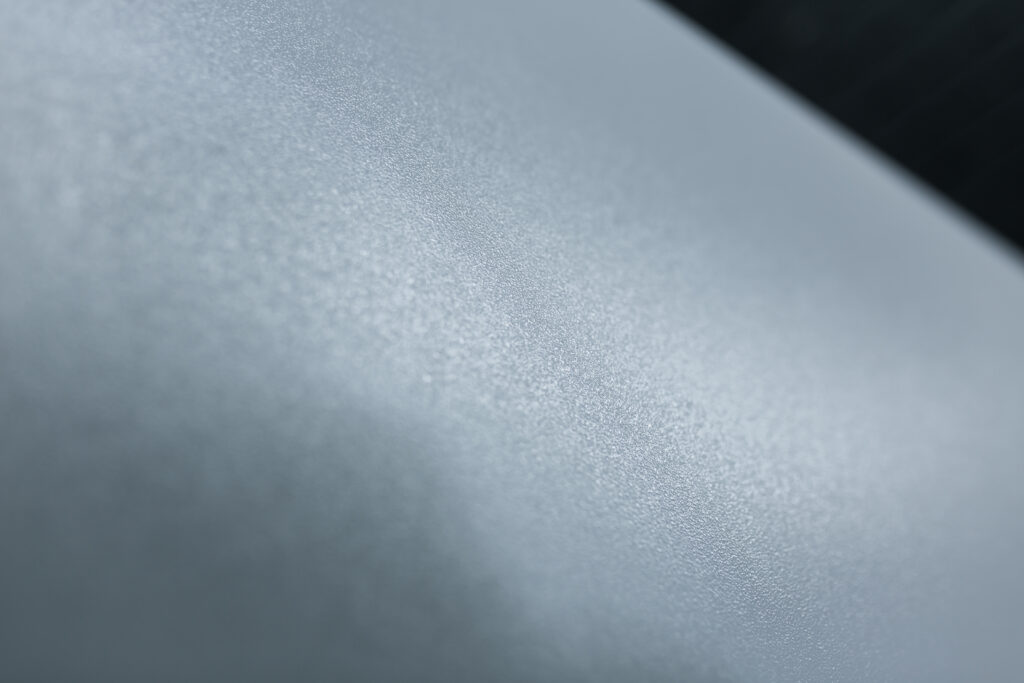
Even when containing recycled content, FreiLacke’s powder coating offers a high level of quality and durability.
Production increased, energy consumption reduced
Whilst FreiLacke’s energy consumption stood at 627 kilowatt-hours per tonne (kWh/t) in 1995, by 2023 it had fallen to just 498 kWh/t. This reduction of almost 20 per cent is particularly impressive given that production volumes more than doubled over the same period and the products being manufactured require more energy. Despite the increased output, water consumption is currently around 80 per cent below the 1995 level. CO₂ emissions from the manufacture of the products have also fallen – they have been reduced by a good 88 per cent. [5]
[3]: Environmental Statement
[4]: Downloads – FreiLacke
[5]: For FreiLacke, sustainable action is embedded in its corporate DNA | FreiLacke October 22, 2024; Accessed on: July 28, 2026